The shift is being named at the top of the industry. Google CEO Sundar Pichai has described AI agents as “the next evolution of the web,” predicting that information-seeking queries will become agentic and that Search itself “would be an agent manager” rather than a list of links.
AEO Is {Part} of the Design
Your website has two audiences now: humans, and agents.
01/
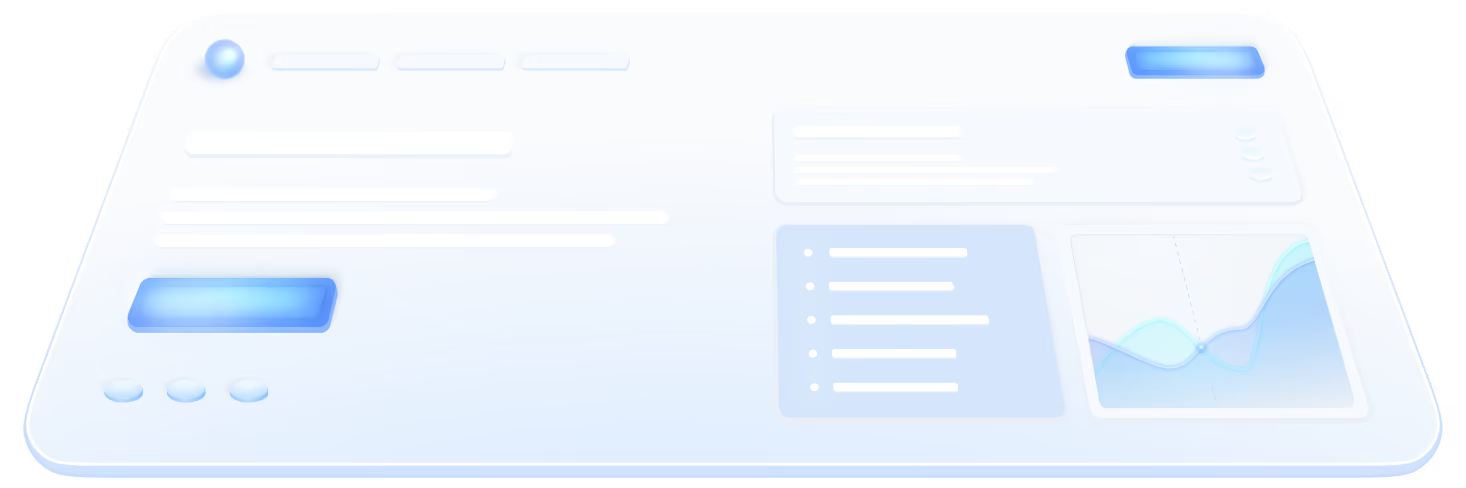
Surface
The visible website: brand, visual design, interface and the signals that build human trust.
02/
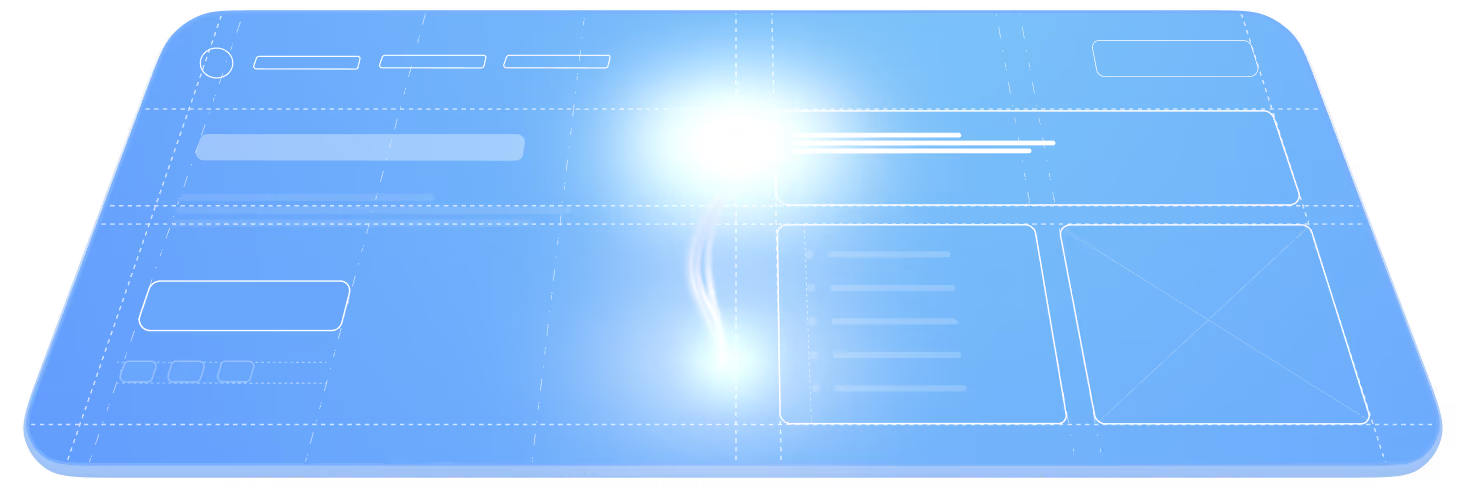
Structure
The experience beneath the surface: interaction, navigation, wireframes and the logic of user flow.
03/
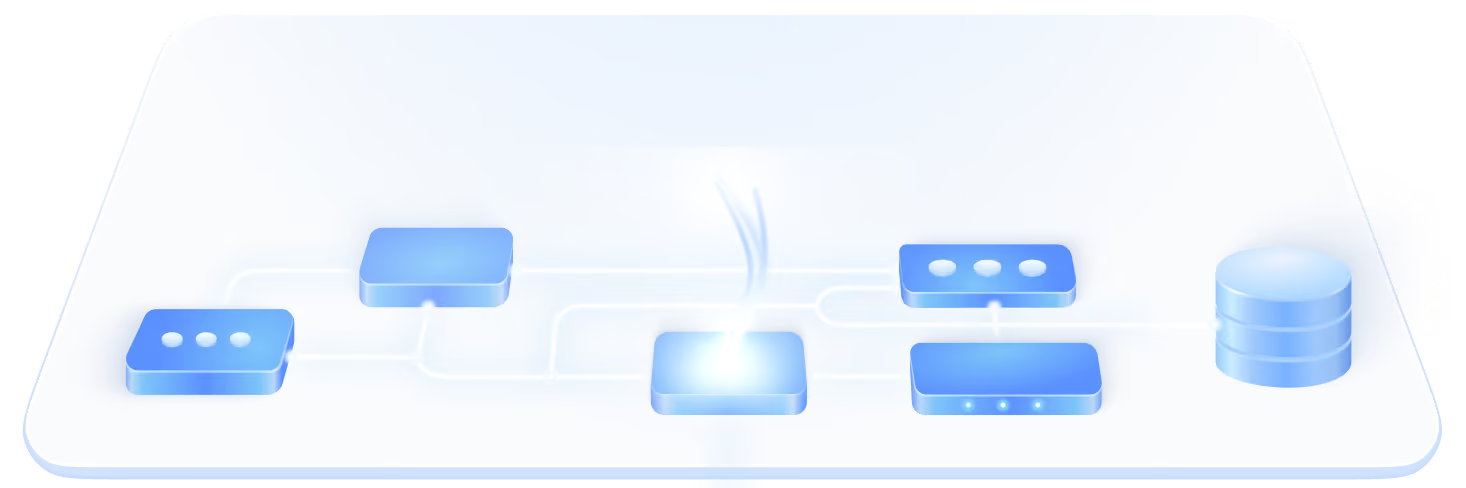
Data
The operational layer: business logic, systems, integrations, and core information.
04/
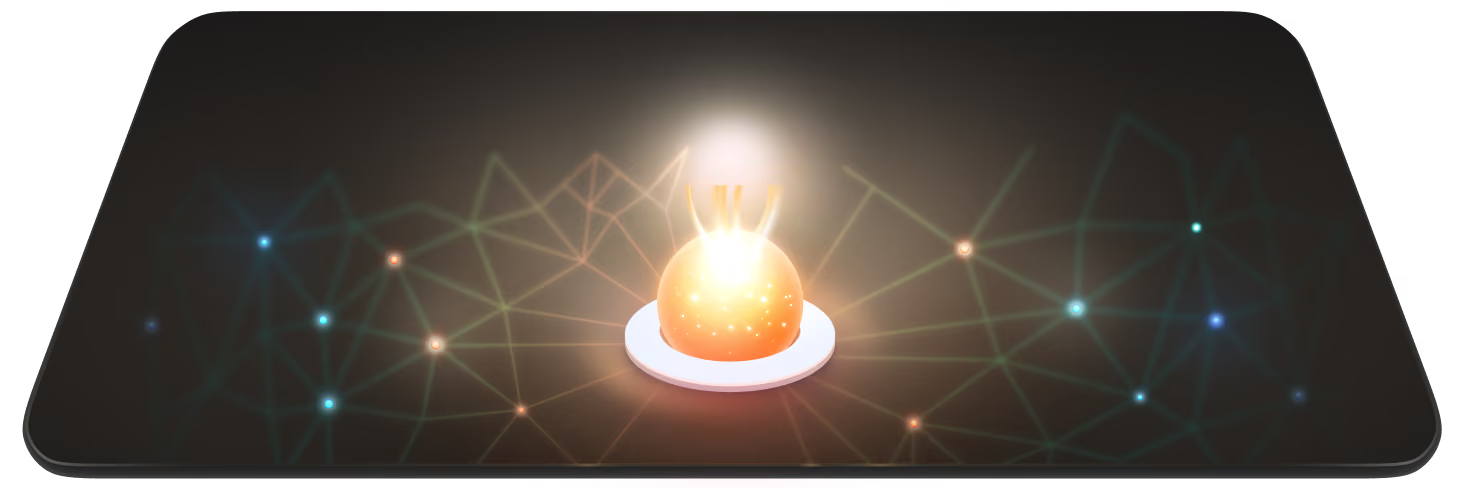
The Carcass™
The machine-legible layer that connects the whole system and makes its meaning intelligible to AI.
These Systems Don’t Rank Pages. They Synthesize Answers.
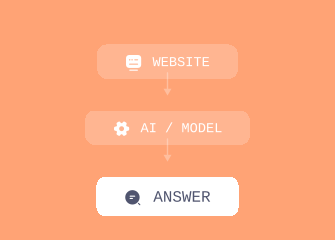
Your buyers ask AI before they reach your homepage. A site can be beautiful, fast, and flawless, and still be structurally invisible to the models deciding whether it is named in the answer at all.

Found & Cited
Peppermint designs AEO into your architecture so your site can be found, understood, and cited.


Built From the Start
Most agencies bolt AEO on after launch. We build it in from the start or retrofit it into existing sites.


Built for Answer Engines and LLMs
ChatGPT, Google AI Overviews & AI Mode, Perplexity, Claude, DeepSeek, Gemini, Microsoft Copilot, Grok, OAI-SearchBot, Google-Extended, Meta AI, Qwen, Mistral / Le Chat, Brave Leo, You.com, Poe, Arc Search, Andi, Komo, Phind, Baidu Ernie, Naver AI, Yandex AI.
The Layers of a Modern Site
Three of these layers, every studio builds. The fourth, we defined, and it is ours.
Layer
Reader
Function

Surface
Reader
Humans
Function
Visible design: brand, interface, trust

Structure
Reader
Humans + UX
Function
Interaction, wireframe, user flow

Data
Reader
Systems
Function
Back office, logic, integrations

The Carcass™
Reader
Models + agents
Function
The machine-legible substrate that renders all three intelligible to AI
Already Have a Site?
The Carcass can be engineered into an existing build. Most sites were designed before this reader existed.
Design Evolves with its Readers
Design is the discipline of being trusted, the medium of understanding, and it has re-formed itself each time a new kind of reader appeared. On-site and off-site answer engine optimization (AEO and GEO) is not a break from design. Design has always evolved with its reader. It is now a part of your website.
ERA 01
Cave Walls
Graphic brief
The tribe
Design’s answer:
The first symbols: meaning made transmissible
ERA 02
The Printing Press
Graphic brief
The mass public
Design’s answer:
Typography, legibility, layout at scale
ERA 03
Industrialization
Graphic brief
The machine and the market
Design’s answer:
Systems, standardization, the modern brand
ERA 04
The Web
Graphic brief
The screen
Design’s answer:
Interface, UX, responsive logic
ERA 05
Now
Graphic brief
The model
Design’s answer:
The Carcass: design legible to AI
The model is simply the newest reader.
Most of the web is still writing for the last one.

What the Carcass™ Actually Is
A deliberately engineered architectural layer, grounded in design, linguistics, semiotics, and information structure. Not a plugin, and not content written for robots:
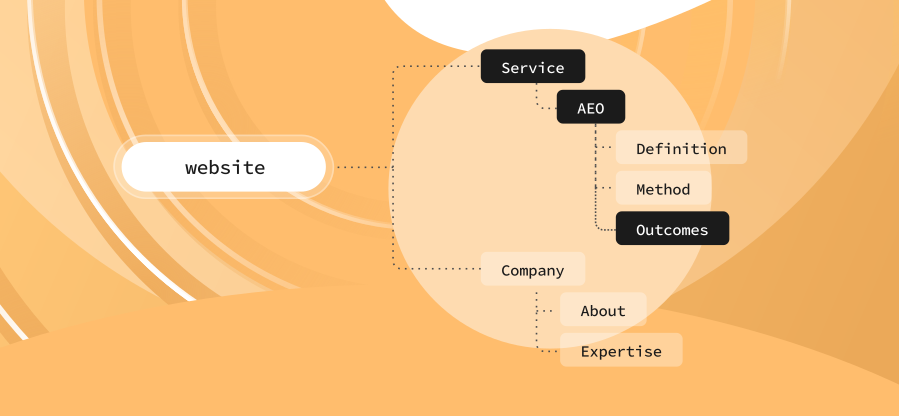
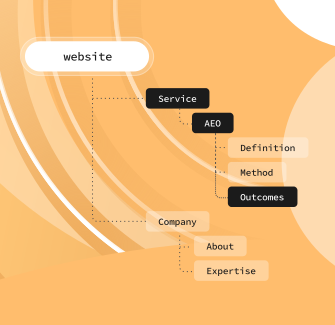
Semantic architecture
A structure the model disambiguates without guessing, so retrieval is accurate rather than approximate.
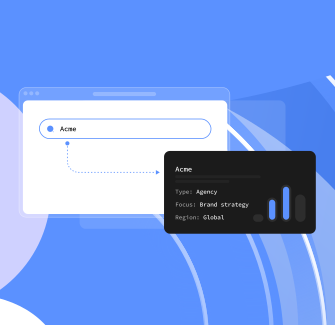
Entity and referential design
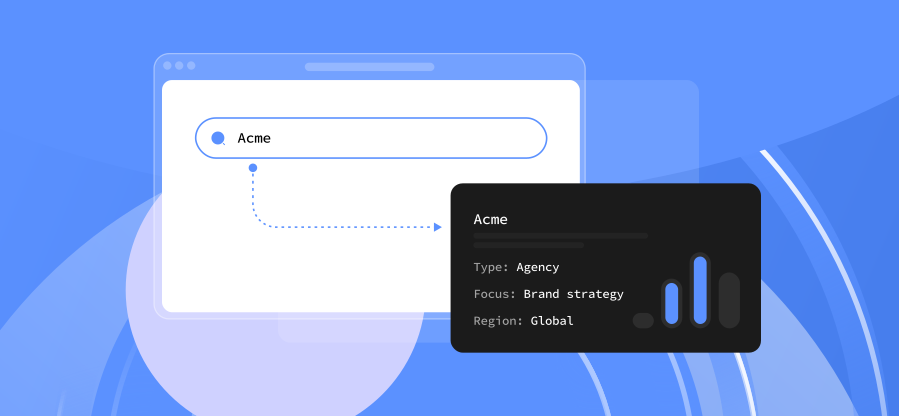
So AI resolves what you are, not merely what you claim. Your brand becomes a stable referent in the knowledge graph, not a floating signifier.
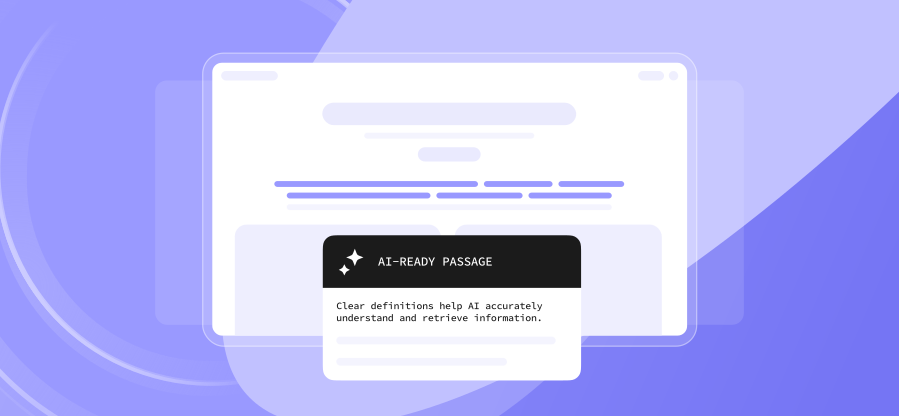
Retrieval-ready content, token and concept coherence across the site
Engineered at the passage level to be extracted, cited, and trusted by large language models (LLMs).

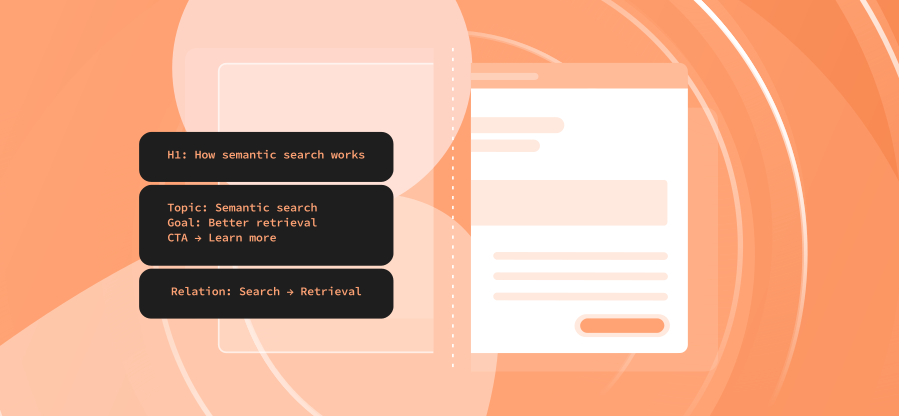
Machine-legible interaction
Meaning that survives de-rendering. Strip the visual surface, and the signified remains intact in the structure.
The test of good design is no longer how it looks.
It is whether its meaning holds when the surface is gone.
Google’s own VP of Search, Liz Reid, calls AI “the most powerful engine for discovery that the web has ever seen,” as Google moves Search from ranked links toward AI agents that fetch and present the web on a user’s behalf.
%204.svg)
Why This Isn’t What Other Agencies Sell
Most Agencies


Schema bolted on after launch

Architecture designed into the build, or retrofitted deliberately
A tool subscription and a monthly PDF
Original research, engineered into the design system
A manager reading an export, plastered onto a slide
Scientific, linguistic, and design-logic method, applied by the people who authored the framework
Updated SEO
Updated SEO plus a new meta-level layer of search:
AEO and GEO built into the design, with agents also in mind
A service they resell
Scientific approach. Intellectual property originated:
the foundation, not the flyer. Pioneering the framework
What You Get
A site built to be found, understood, and cited by humans and AI.

Human-First Design
A clear, distinctive experience that builds trust and makes your brand easy for people to understand.
AI-Ready Architecture
A semantic structure that helps AI understand your brand, content, and the relationships between them.
Retrieval-Ready
Content engineered to be discovered, extracted, and cited across search and AI answer engines.
New Rules. Most Sites Haven’t.
Search and AI policy now move in months, not years. Falling behind is not just unprofitable anymore. It is costly:
Updates: Invisible where it counts. Google’s AI features draw from the same index and reward authoritative, well-structured content. Sites built for the old rules may simply not surface in AI answers.
Google Search Central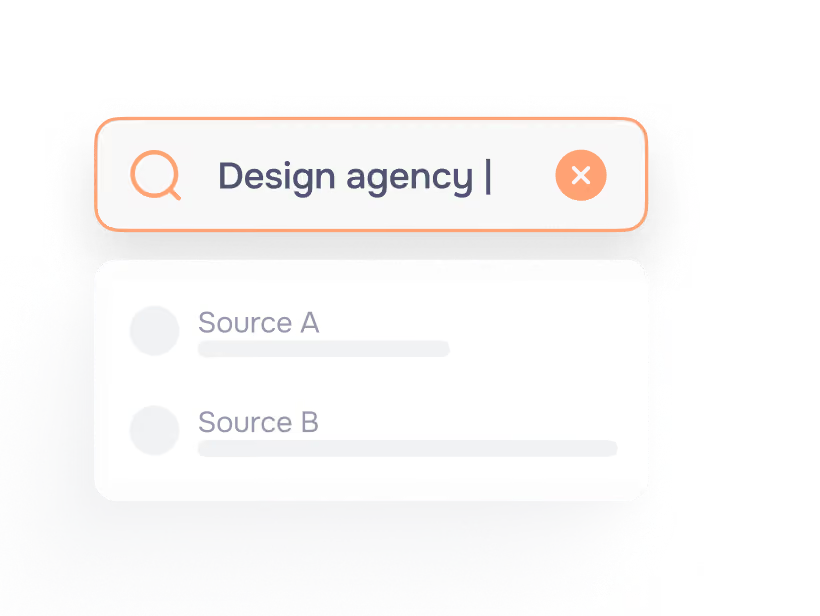
Exposed to new law. From 2 August 2026, the EU AI Act’s Article 50 requires disclosure and machine-readable marking of AI-generated content. Ignoring it risks non-compliance, not just poor performance.

Penalized for getting it wrong. Misleading structured data violates Google’s policies and can be actioned. Correct implementation can mean the difference between visibility and a manual penalty.
Google structured-data policies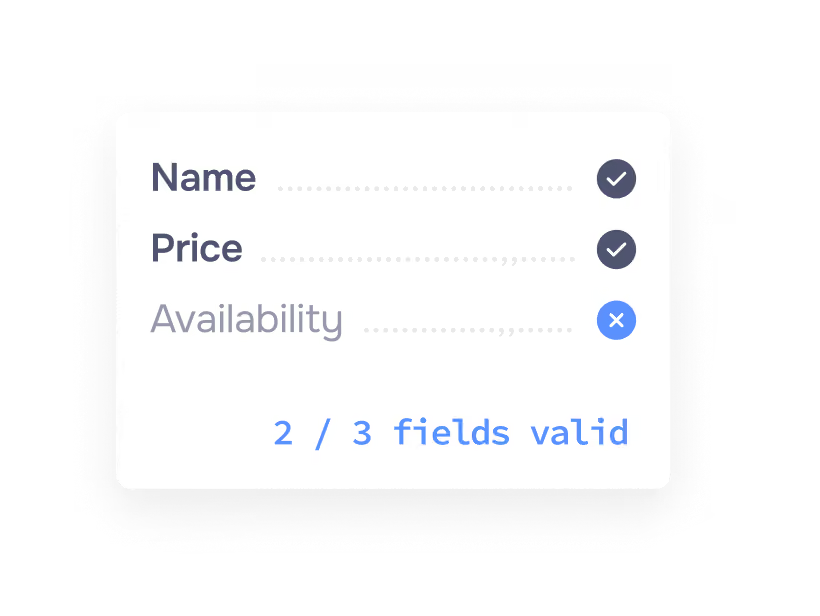
This Is the Foundation. Not the Ceiling.
We are conducting original research into a layer of the web no agency has studied: how meaning, symbols, and tokens are read not only by answer engines today, but by the autonomous agents that will discover, evaluate, and act on the web next.
Proven,
Not Speculative
Grounded in how these systems measurably retrieve and cite right now, tested against live engines, not theory.

Original
No prior playbook exists. We are writing the first, from first principles.

Ours
We are the first to research and formalize this. It is our intellectual property, studied and developed in-house.

Early
The brands made legible to AI now, before competitors grasp the question, become the ones models default to later. That advantage compounds and does not reverse.
The window is open because almost no one sees it yet. If your competitors haven’t found us, that is precisely the moment to move.
Let’s Make Your Brand
AI-Discoverable
Share details about your brand, audience, and goals. We’ll build the semantic structure and content systems that help AI understand, retrieve, and accurately represent your business.


FAQs
Everything you need to know about how we handle communication, feedback, and handoffs. No sales fluff, just clear answers on how we work together.
What is answer engine optimization (AEO)?
AEO is the practice of structuring a website so AI answer engines, such as ChatGPT, Perplexity, and Google’s AI Overviews, can retrieve, understand, and cite it. Unlike traditional SEO, which optimizes for ranked links, AEO optimizes for being named inside a synthesized AI answer.
What is the Carcass Method?
The Carcass Method is Peppermint’s original formalized framework that treats AEO and GEO as an architectural layer of web design. It combines semantic architecture, entity design, and retrieval-ready content so a site is legible to AI models and agents.
How is AEO different from SEO?
SEO optimizes a page to rank as a link in search results. AEO optimizes a page to be cited as a source inside an AI-generated answer. AEO is best understood as the next meta-level layer of search, built on top of proven SEO fundamentals rather than replacing them.
Can AEO be added to an existing website?
Yes. The Carcass can be retrofitted into an existing build. Most websites were designed before AI answer engines existed, so they lack the machine-readable layer that models rely on to retrieve and cite them.
Does schema markup still matter for AI search?
Schema markup is table stakes. Google’s own guidance states no special schema is required to appear in AI Overviews, yet correct structured data still helps machines parse entities and relationships. The stronger levers for AI citation are authority, entity clarity, and information gain.
Do you optimize for AI agents, not just answer engines?
Yes. Beyond answer engine optimization, Peppermint researches how autonomous AI agents discover, evaluate, and act on the web, and builds sites that remain usable as agents become primary visitors.